We’re delighted to present an exclusive interview with the brilliant minds behind XR CROWD CTRL, a pioneering Open Call 2 winner of the XR2Learn program. In this conversation, the team shares their compelling journey to revolutionize vocational training through immersive XR solutions.
Discover how they are leveraging AI-powered dashboards to enhance collaborative learning in real-time, empowering trainers and shaping the future of skills acquisition in critical industries.
1. Can you briefly present us your team? What’s your story and what drives you?
Since 2011, the MIMBUS team has been working to revolutionize vocational training by providing instructors with immersive learning solutions. We recognize that blue-collar jobs are often underestimated. Young people are increasingly reluctant to pursue careers in this field, and companies struggle to hire a skilled workforce. This talent shortage impacts the economy, despite these jobs requiring a high level of skill and often offering competitive salaries.
By deploying XR learning solutions in TVET centers, we can attract new talent. Learners become more engaged in their training and can benefit from enhanced learning experiences.
Today, we are collaborating with developing countries to provide their TVET centers with these tools, enabling them to leverage this effective training solution, and accelerate the skills acquisition of their population.
2. In simple words, what is your project about and how is it linked with XR2Learn?
Our mission is to support instructors in digitizing their training to become even more effective. To achieve this, we provide them with virtual reality tools that increase learner engagement and help them develop the skills related to their job.
These tools are connected to a platform that analyzes the performance of learners who complete immersive exercises. This platform offers instructors a lot of information on the skill acquisition of their learners.
With XR2Learn, we decided to focus on our immersive learning solutions dedicated to the training of logistics agents. This tool offers a realistic warehouse environment where trainees can practice and improve their skills safely, and collaborate with fellow learners.
Our objective is to take technology even further by developing an AI-based tool that allows instructors to monitor their learners in real-time as they collaborate in virtual reality. This enables instructors to be more responsive and better guide their learners in their training.
3. How did you come up with this project idea and what benefits will it bring to the end users?
The project idea for MIMBUS LOGISTICS was conceived to address the growing need for effective and versatile training tools in the logistics sector. The aim was to create a virtual teaching tool that could provide comprehensive training for logistics agents, from beginner to expert levels. The idea was to leverage virtual reality to create a safe and interactive learning environment where trainees could practice and hone their skills without the risks associated with real-world training.
By integrating the capabilities of XR2Learn, the MIMBUS LOGISTICS project can further benefit from the collaborative and innovative environment provided by the platform. This can lead to the development of more advanced and effective training tools, ultimately benefiting end users by providing them with cutting-edge educational resources.
4. What type of synergies do you want to explore/are already exploring with other XR2Learn teams?
At MIMBUS, we are keen to explore synergies with other XR2Learn teams, particularly in addressing common challenges related to skill quantification and the integration of “useful” AI. We are very interested in discussing these issues with our colleagues. We look forward to the meet-up in Lugano to delve into these topics with them. Collaborating on these fronts will help us enhance our immersive learning solutions and ensure that our AI tools are both effective and practical for real-time monitoring and guidance in virtual reality training environments.
5. What are your plans for the future when it comes to the development of your ideas & projects?
Once the XCC project is completed, our future plans include generalizing the dashboard and creating an SDK to ensure it can be integrated into any Unity project. This will allow us to provide a versatile and adaptable tool that can be utilized across various applications, enhancing the flexibility and usability of our solutions. By doing so, we aim to support a broader range of projects and foster innovation in immersive learning and training environments.
EcoDrive XR represents a strategic partnership between deep technology firm MATSUKO and the Secondary Vocational School of Industrial Technologies in Košice-Šaca.
This collaboration is dedicated to providing human-centered, sustainable holographic training. The initiative aims to cultivate the next generation of green industry professionals within the automotive and electric vehicle manufacturing sectors. Get to know them now!
1. Can you briefly present us your team? What’s your story and what drives you?
MATSUKO is a deep tech company pioneering real-time holographic communication using AI and a single-camera 3D reconstruction technology. Our solution brings people to life as lifelike holograms in extended reality (XR), making remote presence feel natural, human, and emotionally rich. We combine patented technology with a strong vision: to revolutionize how we connect, learn, and work — whether it’s in education, industry, or creative collaboration. From holographic teachers to virtual meetings, MATSUKO enables interactions that feel like you’re truly there.
Our founders are engineers combining 3D and AI expertise — one was the lead programmer of the globally awarded 3D computer games such as the Assassin’s Creed, another trained robots to understand emotion using AI. What unites us and drives us is the belief that technology should feel human and that we are changing how people collaborate using cutting edge XR and AI technology. That’s why, in EcoDrive XR, we’re building holograms that make education personal, emotional, and unforgettable.
We are happy that our partner is the Košice-Šaca Vocational School of Industrial Technologies, a leading Slovak secondary school focused on practical education in engineering, mechatronics, and electrical technologies.
2. In simple words, what is your project about and how is it linked with XR2Learn?
EcoDrive XR is like teleporting the best teacher into the classroom — as a hologram. Students learn how electric vehicles are made, from battery chemistry to car assembly, all inside an immersive, interactive world. Thanks to XR2Learn, we add emotion-aware learning and personalization, making sure every student — especially girls — feels seen, supported, and inspired.
3. How did you come up with this project idea and what benefits will it bring to the end users?
Just a few weeks before the XR2Learn Open Call was announced, we had already started collaborating with the Vocational School of Industrial Technologies in Košice-Šaca. When we saw the call, we instantly knew — this is for us.
Slovakia is the world leader in car production per capita, and our region is transforming fast, with Volvo building a new factory right here in Košice.
We saw a unique opportunity to prepare students for this green shift by bringing XR into education – locally and globally.
With EcoDrive XR, students don’t just learn — they experience the process of building electric cars, guided by holographic teachers and interactive 3D models.
At MATSUKO, we’ve been working on a dream — bringing Star Wars-style holograms to life. We’ve patented a unique way to turn people into real-time, 3D holograms using just a single camera.
Education is one of the most meaningful use cases for us because we believe deeply in the power of human presence — especially that of teachers. With EcoDrive XR, we combine our holographic communication with immersive XR simulations, turning passive lessons into engaging experiences. Students are no longer just listeners; they’re active participants — assembling vehicles, exploring battery design, and interacting with their teacher as a lifelike hologram. It’s a leap forward from traditional education to something truly personal and transformational.
We’re turning textbooks into experiences. Instead of reading about EV production, students build batteries, assemble vehicles, and interact with holographic teachers in virtual environments. Our modules speed up training and boost retention. Plus, by making tech feel intuitive and inclusive, we’re opening doors for more girls to enter STEM.
4. What type of synergies do you want to explore/are already exploring with other XR2Learn teams?
We’re excited to collaborate on enablers that make XR education smarter and more human — like emotion tracking, adaptive feedback, or new ways to blend physical and virtual learning.
Together with other XR2Learn teams, we hope to build a future where XR tools are not only technically brilliant but also deeply meaningful in the lives of learners.
5. What are your plans for the future when it comes to the development of your ideas & projects?
We believe the future of communication lies in presence — and our goal is to replace flat video calls with true 3D holographic presence that captures the richness of nonverbal expression, making virtual collaboration more natural, personal, and impactful across education, industry, and everyday life.
We’re building a scalable platform for holographic communication — making lifelike, real-time presence accessible anytime, anywhere.
We are introducing you to a groundbreaking solution in healthcare: the use of simulated VR training to equip healthcare workers with life-saving neonatal resuscitation skills, helping them to deliver better care for newborns at the most critical moment.
1. Can you briefly present us your team? What’s your story and what drives you?
The Neonatal team is composed of experts from both healthcare and XR design. At the core of the project are Stine Lund, Anja Poulsen, and Hanna Rahimi from Rigshospitalet, bringing extensive experience in global health, pediatrics, and neonatal care. They are supported by Johannes Sivesgaard and Yiannis Kalaitzoglou from Khora, a leading XR production studio specializing in immersive experiences. The team is driven by a shared passion to improve neonatal healthcare and training for healthcare workers, and innovating on how training in XR technologies can overcome the challenges of traditional training methods.
2. In simple words, what is your project about and how is it linked with XR2Learn?
The project, NEONATAL, uses Virtual Reality (VR) to train healthcare workers in neonatal resuscitation, aiming to enhance the quality of care provided to newborns in emergency situations. The project is linked to XR2Learn through its use of XR (Extended Reality) technologies for immersive learning and training. We want to learn how to optimize our training modules to improve neonatal emergency care through scalable and adaptable VR-based training.
3. How did you come up with this project idea and what benefits will it bring to the end users?
The idea for NEONATAL originated from the need to reduce neonatal deaths, which still account for a significant percentage of under-five mortality. The project was conceived to address the challenges of current neonatal training methods. It provides benefits by offering a scalable, cost-effective training solution that can be updated regularly, allowing healthcare workers to practice and refine their neonatal resuscitation skills at their own pace. The project benefits healthcare workers by providing realistic, repeatable training scenarios that build their confidence and decision-making skills, ultimately improving the quality of neonatal care and saving lives.
4. What type of synergies do you want to explore/are already exploring with other XR2Learn teams?
The NEONATAL project seeks to collaborate with other XR2Learn teams that focus on their expertise and experience with training, VR development, and innovative educational methodologies. We have not yet explored them, but we hope that the synergies will include sharing insights on how to enhance XR applications in medical education, ensuring that the training modules are scalable and adaptable to different healthcare environments, and contributing to a broader European effort to improve medical training through XR.
5. What are your plans for the future when it comes to the development of your ideas & projects?
Moving forward, NEONATAL plans to continue testing and refining the VR training modules, with the aim of implementing the project across Europe. The goal is to create an adaptable VR training application that can be integrated into healthcare systems, with the potential for further expansion into other areas of healthcare training. The project will contribute to the development of standardized, human-centric XR training solutions that can be implemented globally to improve healthcare outcomes.
Let’s explore their innovative project, which pioneers the adoption of Extended Reality (XR) technology to train operators_5.0 (O5.0) employed in the de-manufacturing sector, unlocking the potential for circular economy (CE) and demonstrating the technology’s capabilities within the consumer electronic industry (home appliances).
1. Can you briefly present us your team? What’s your story and what drives you?
The X-DE-MAN project team is the result of a synergistic collaboration between two complementary forces: the academic expertise of the University of Parma (UniPR) and the technological know-how of MORE srl, an experienced provider of immersive and interactive solutions.
From UniPR, the academic team includes, Professor Claudio Favi, lecturer in Mechanical Drawing and researcher specializing in methods and tools for product lifecycle-oriented design, with a strong focus on Design for Disassembly, Professor Eleonora Fiore, lecturer in Industrial Design and researcher in the fields of Life Cycle Management and design content creation, and Dr. Rachele Rizzoli, a PhD candidate in Industrial Engineering, contributing to research and development activities within the project.
On the industry side, the MORE srl team brings together a diverse group of professionals, including Enrico Santori, Diego Zazzeroni, Bruno Arina, Marco Cipolletti and Massimo Mastrilli. Each member of the MORE team contributes unique skills in XR development, 2D/3D graphics, VR systems integration, audiovisual production, and interactive solution design – spanning from cultural heritage applications to industrial manufacturing environments.
Our story began in the early 2010s, when UniPR and MORE started collaborating on a variety of interdisciplinary projects. This long-term partnership has been mutually enriching: UniPR gained access to cutting-edge immersive technologies, while MORE deepened its understanding of academic and industrial challenges, shaping tailored solutions to meet them.
Over the last three years, our collaboration has intensified, especially with the installation of a CAVE immersive environment at UniPR, provided by MORE, and the development of preliminary VR simulation tools for product disassembly training.
What drives us is more than just research or technology, it’s the strong bond we’ve built over the years. Beyond a fruitful professional collaboration, we’ve developed a true friendship and a shared vision. We are committed to supporting one another and co-developing innovative projects that not only advance academic research and industrial practice, but also contribute to the evolution factories and industrial sites, and in the specific domain of X-DE-MAN to help a new generation of operators/workers (Operator 5.0) in training through immersive, user-centered solutions.
2. In simple words, what is your project about and how is it linked with XR2Learn?
X-DE-MAN project aims to enhance professional education by developing an innovative, competence-based learning system using eXtended Reality (XR). We plan to create an open-source Virtual Reality (VR) training environment where learners can practice complex technical tasks – such as disassembly operations – in an interactive and safe setting. This approach is intended to support the development of practical skills more effectively than traditional educational methods.
A key feature of X-DE-MAN is the integration of a proprietary module that will automatically generate disassembly maps – step-by-step visual guides to support learners during training. This component is designed with commercial potential in mind and forms a central part of our market strategy. To extend the learning beyond the VR environment, we also plan to develop a mobile beacon-based app that will offer just-in-time support, helping users retain and apply what they have learned in real-world job settings.
This project aligns with the goals of XR2Learn by contributing a forward-looking, real-world use case that demonstrates the value of XR in competence-based education. XR2Learn focuses on creating a trustworthy and collaborative European ecosystem for XR in learning, and our project supports this by exploring scalable, inclusive, and industry-relevant solutions. By combining open-source tools with a market-oriented approach, we hope to show how XR can make industrial training more engaging, adaptive, and impactful – both during and after formal instruction.
3. How did you come up with this project idea and what benefits will it bring to the end users?
The idea behind X-DE-MAN emerged almost organically, following the installation of an immersive CAVE system at the UniPR by MORE. Building on the University’s research expertise – particularly in lifecycle-oriented product design – and on a deep understanding of industrial needs, especially in the home appliance and consumer goods sectors, the opportunity became clear: to create a technical solution that allows immersive and augmented interaction with 3D CAD models of product manufacturers, enabling the simulation of disassembly operations.
These operations are increasingly critical in the context of circular economy practices, where selective disassembly is essential to give a new life to products and components through repair, remanufacturing, repurposing, and sustainable product management. The project was conceived by recognizing the evolving demands of modern industry, where assembly and disassembly processes must coexist – often within the same manufacturing facility. This shift requires a new kind of operator: one trained to perform both tasks with competence, flexibility, and a deep understanding of the product lifecycle.
The convergence of industrial challenges, academic expertise, and the technical capabilities of a solution provider like MORE created the fertile ground in which the idea of X-DE-MAN could take root and grow.
The benefits of the project span across several levels:
– For industry, X-DE-MAN provides a cutting-edge tool for advanced operator training within a low-cost, risk-free virtual environment. It helps industries prepare their workforce for the complexities of product lifecycle management, enhancing operational efficiency and sustainability.
– For operators, X-DE-MAN platform offers the opportunity to acquire new knowledge and hands-on skills through immersive simulations, enriching their professional experience and employability—especially in future-forward sectors where circularity and smart manufacturing are key.
– For academia (like UniPR), X-DE-MAN represents the way for integrating extended reality tools into engineering and design curricula, equipping students with real-world competencies and exposing them to emerging technologies in the context of Industry 5.0.
– For technical providers (like MORE srl), X-DE-MAN represents a strategic step toward expanding its portfolio of XR-based applications. It also opens new commercial opportunities by positioning the company at the intersection of immersive technologies and sustainable industrial transformation.
X-DE-MAN is more than just a tool – it’s a bridge between disciplines, technologies, and generations, helping build a smarter, more circular, and human-centered industrial future.
4. What type of synergies do you want to explore/are already exploring with other XR2Learn teams?
As part of the XR2Learn ecosystem, we are eager to explore synergies with fellow teams to enhance X-DE-MAN impact and contribute to the broader goals of immersive vocational training. We aim to collaborate with teams like PROXIMA, which is developing an Augmented Reality (AR) training kit for on-the-job and site-specific training in industrial contexts. Their focus on cognitive ergonomics and human factors aligns with our competence-based approach. By sharing insights and methodologies, we can collectively refine frameworks that prioritize learner-centric design and adaptability.
Morevover, the XRTwinScape project utilizes digital twins to create immersive virtual environments for industrial training. Integrating our disassembly map generator with their TwinScapeEditor could enhance the realism and interactivity of training modules, providing learners with detailed, step-by-step visual guides within a digitally replicated workspace. Additional projects like XR CROWD CTRL (XCC) are developing AI-powered dashboards for trainers to monitor and analyse collaborative XR training sessions. Collaborating with such teams could enable us to incorporate real-time feedback and performance analytics into our VR environment, thereby improving the effectiveness of training and allowing for immediate corrective actions. Finally, the XPOTLESS project focuses on VR training for cleaning and disinfection practices in the agrifood sector. By exploring their methodologies and adapting our tools accordingly, we can extend our training solutions to new industries, promoting sustainability and safety across various sectors.
Engaging with the broader XR2Learn community allows for the exchange of best practices, technological resources, and research findings. This collaborative environment fosters innovation and ensures that our solutions are aligned with the latest advancements in XR technologies. Through these synergies, we aim to create a cohesive and interoperable XR training ecosystem that is scalable, adaptable, and responsive to the evolving needs of vocational education and training across Europe.
5. What are your plans for the future when it comes to the development of your ideas & projects?
In the future, our ambition is to evolve this project beyond its initial implementation into a scalable and impactful solution that can be adopted across multiple sectors and countries. While the first phase focuses on developing the core XR training environment, the disassembly map generator, and the supporting mobile app, our long-term vision involves expanding these tools to cover a wider range of technical domains, including energy, mobility, and advanced manufacturing. A critical part of our future plan is to patent the proprietary disassembly map generation technology. This component not only represents a technological innovation but also provides a sustainable business opportunity. By protecting this intellectual property, we aim to commercialize it through licensing agreements or as part of a bundled training package for vocational institutions and industrial partners.
We are also committed to embedding students at the heart of the innovation process. In the coming phases, we will create structured opportunities for learners to co-design features, test prototypes, and provide continuous feedback. This participatory approach ensures the solution is not only pedagogically effective but also engaging and accessible. Moreover, we want to explore how students can contribute creatively and even technically to the platform evolution, potentially integrating aspects of gamification, storytelling, or peer-to-peer support.
Another important direction is to strengthen the educational ecosystem around the tools. This includes developing teacher training materials, integration guidelines for vocational institutions, and long-term support mechanisms. We also see potential in aligning our methodology with European competence frameworks (like EQF) and exploring certification pathways linked to learning outcomes demonstrated in the XR environment.
Sustainability is also a key focus. We are considering how to make the project environmentally and economically sustainable by using energy-efficient hardware, modular content creation, and open-source development to encourage community contributions and reuse.
Finally, we envision forming new partnerships, not only with education providers but also with industry stakeholders, tech developers, and public authorities, to explore future use cases such as remote maintenance training, cross-border certifications, or upskilling for green and digital transitions. In essence, our future plans has the objective of transforming this project from a focused pilot into a dynamic, learner-driven platform with real-world applications and long-term impacts in industrial education and beyond.
We are taking you into their groundbreaking project, XRTwinscape, which tackles the challenge of preparing workers in realistic virtual training environments. These environments replicate real-world workplaces, offering familiar surroundings and hands-on experience, while overcoming security and replicability limitations. XRTwinScape uses digital twin technology, including Gaussian Splatting for rapid, high-quality digital twin creation.
1. Can you briefly present us your team? What’s your story and what drives you?
We are a consortium that brings together a unique blend of industry experience, technological expertise, and creative insight. The team includes Formamentis, which is anchored by its 2,000 m² Eduwork industrial training complex that provides robust educational and hands-on training facilities; CERICT, which contributes deep technical knowledge in XR applications and advanced digital reconstruction; and Picaresque, which adds a creative edge through its expertise in developing immersive virtual environments for cultural heritage and industrial use cases. United by a shared vision, our team is driven by a passion for transforming training methods by merging real-world expertise with cutting-edge XR technology. Our goal is to create safe, scalable, and effective training experiences that empower individuals to excel in a rapidly evolving digital landscape.
2. In simple words, what is your project about and how is it linked with XR2Learn?
XRTwinScape provides an innovative solution that digitally replicates physical workspaces as high-fidelity 1:1 digital twins, forming the basis for immersive and context-rich training experiences. Our user-friendly web editor allows trainers to digitize real-world environments and enrich them with contextual information in the form of text, audio, or video annotations, thereby creating detailed, scenario-based lessons. XRTwinScape will also exploit the XR2Learn Personalization Enabler, which customizes lesson content based on the trainee’s emotions or activity levels, ensuring that the learning experience is uniquely tailored to each individual. Once created, lessons are published on the XR2Learn marketplace, making them easily discoverable by trainees who can access the content using both web and VR players. This comprehensive approach aligns perfectly with XR2Learn’s mission of making training more accessible, realistic, and personalized.
3. How did you come up with this project idea and what benefits will it bring to the end users?
The idea for XRTwinScape emerged from a need to overcome the challenges inherent in traditional workforce training methods. While training in real-world work environments offers valuable hands-on experience, it also presents significant risks, security concerns, and practical limitations in terms of replicability and scalability. Physical spaces are difficult to duplicate and are often restricted to a limited number of trainees at any given time. XRTwinScape addresses these issues by providing a safe, controlled, and repeatable environment where workers can practice and refine their skills without the associated risks of real-world training. The result is a more efficient, cost-effective, and scalable training solution that not only enhances learning outcomes but also significantly reduces risks and logistical limitations for organizations.
4. What type of synergies do you want to explore/are already exploring with other XR2Learn teams?
We are enthusiastic about collaborating with other XR2Learn teams, especially those developing the Personalization Enabler. This collaboration offers an opportunity to integrate personalized training features, such as real-time adaptations based on the trainee’s emotional state or activity levels, into our digital twin environments. Working together, we plan to share insights and technical expertise, develop technology that dynamically shows tailored content specific to individual needs, and create a more immersive and engaging learning experience. This joint effort is expected to enhance the overall effectiveness of our training solutions by ensuring that each trainee benefits from a highly personalized and responsive learning environment.
5. What are your plans for the future when it comes to the development of your ideas & projects?
Looking ahead, the XRTwinScape consortium is focused on commercializing its innovative solution through a subscription-based SaaS platform designed for virtual environment scanning and digital twin creation. This platform is intended to be scalable and accessible, enabling a broad range of users to generate accurate digital replicas with minimal cost and effort. Future developments include integrating project templates and plug-ins that are compatible with major game engines such as Unity and Unreal, making our technology readily adoptable by XR developers and industry professionals. We are committed to continual innovation, planning to enhance the platform further by incorporating user feedback and the latest technological advancements. Our long-term vision is to make advanced training tools widely available, thereby supporting safe and immersive learning environments across a diverse array of industries.
Celebrating Women in XR: Insights from a powerful webinar
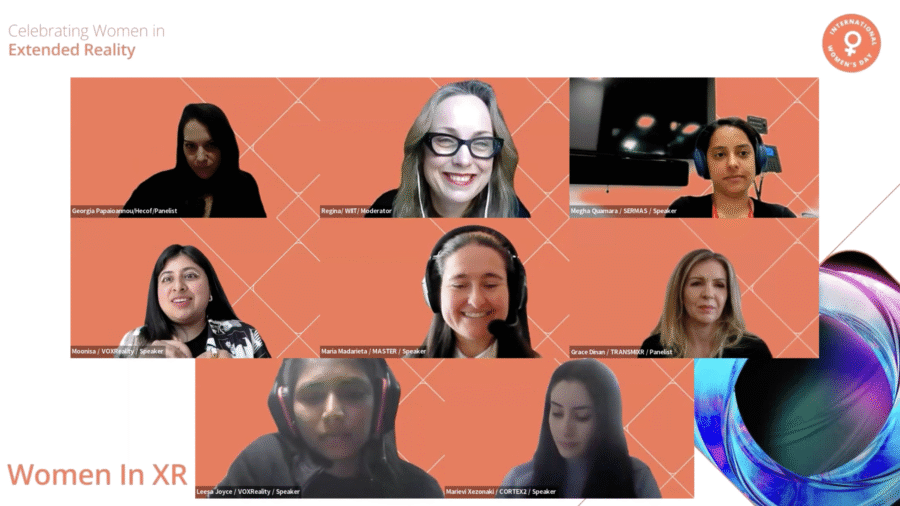
On March 19th, 2025, in celebration of International Women’s Rights Day, we hosted a dynamic and insightful webinar titled “Women in XR.” The event brought together six remarkable women specialists from across the extended reality landscape, offering their unique perspectives on navigating and thriving in a predominantly male field. The webinar was a success, drawing 81 participants eager to learn from these inspiring leaders.
The panelists shared their personal journeys, career highlights, and the challenges they’ve encountered, offering invaluable advice and sparking needed conversations about gender diversity in XR. Here are some key takeaways and powerful quotes from our esteemed speakers:
Building Networks and Overcoming Challenges:
MoonisaAhsan emphasized the importance of community, stating: “Try to find your network, try to find your community. You have all the power and capacity to do it alone, but you don’t need to do it. Reach out to your mentors and mentees and look out for them, ask questions and get comfortable with rejection is part of the process, you need to accept it.” She also highlighted the diverse opportunities within XR: “Opportunities in XR are endless, pursue what you are good at. Technology is not the only way. You can work on the hardware, support the team, work on the legal aspects (…). You pick your only skillset. Look on what you are good at, focus on that and it will be your superpower”.
MarieviXezonaki encouraged aspiring women in the field: “Do not be afraid to enter this challenging field, quite male dominated, don’t be afraid. Prepare yourself and change your mindset to believe in you. Don’t compare yourself to anyone. It doesn’t help to promote yourself in the field. Trust yourself and the pace you are progressing.” She also touched upon the mental barriers women face: “Because we don’t see many women in leadership in this field, this starts to be a mental barrier, they start to doubt themselves and they start to think they need to put in so much effort to prove themselves compared to a man in the same industry.”
The Need for Allies and Representation:
Reginavan Tongeren echoed the sentiment of mental barriers and the need for systemic change: “It is sometimes a mental barrier, but what can we do to fix that? I’m a mom, I have a daughter, I need to do something, maybe it is the education system that needs to change.” She powerfully stated, “We need allies to get there, representation is very important to have, to see and to inspire. We need role models.” Looking towards the future, Regina called for tangible action: “For change tomorrow I would like to wish: make teams really more diverse. We need more diverse people in boardrooms. Give the boardrooms keys out to as many people as possible to make teams more diverse.. And the payment gap still exists, it’s happening on an European level. There are more steps being taken to minimize the gap, but it’s still there and it’s not changing fast enough”.
Breaking the Mold and Embracing Individuality:
GeorgiaPapaioanou offered a strong message of self-belief: “You don’t have to fit the mold have to break it. Challenge yourself. I always tell myself that imposter syndrome is a distraction, then there will always be people that will think that you don’t know as much as you do, you need to prove them wrong.”
Prioritizing Diversity from the Outset:
Grace Dinanemphasized the importance of integrating diversity and inclusion early in project development: “Diversity and inclusion should be a priority from the very beginning of the projects. Right at the proposal stage when choosing. You have a different range of partners to begin with, you have different opinions, mindsets, abilities so you get the best from your project. A lot of times, it can be something you can fix midway to a project, like a tickbox where you put a woman to a panel just to fit in., but it needs to start from the beginning, thinking about accessibility for everyone.”
The Power of Role Models and Mentorship:
Maria Madarieta highlighted the impact of visible role models: “The references are very important, the women reference for example teachers at the school. To let them know that is possible. We should raise awareness, we are mentors, look “I’m doing this, it’s possible”. This way we can break the barriers and inspire”.
Supporting Women Entrepreneurs and Addressing Societal Perceptions:
MeghaQuamara suggested concrete ways to support women in XR: “I think programmes and XR initiatives to have dedicated spaces to women entrepreneurs, offering training programmes, technical guidance, how to apply for funding and tech related contributions. Additionally, introducing small changes and flexibility to help on the family side would be great to support careers.” She also addressed ingrained societal biases: “There’s societal perception about a man being related to the tech field and this is something that stops women or makes them doubt themselves. But we also need to talk about the failures. We can’t always talk about the cases where we see names driving in the community. You need to keep in mind that you can’t feel success without failure”.
The Value of Diverse Perspectives:
Leesa Joyce underscored the unique contributions women bring to the field: “We talked about hard skills, as we can be as talented as the other gender, but talking about the other side we can bring another world of perspective. We can give a different perspective from the man that’s already there.“
This webinar served as a powerful reminder of the talent, resilience, and perspectives that women bring to the XR industry. The insights shared by these incredible panelists offer valuable guidance for aspiring professionals, highlight the ongoing challenges, and inspire us all to work towards a more inclusive and equitable future for women in XR.
Inspiring the Next Generation: A Women in XR Webinar
The XR field might be booming, but it’s no secret that women are still underrepresented in this otherwise innovative space. To address this gap and celebrate the amazing contributions of women in XR, we’re thrilled to announce an upcoming webinar: Women in XR: Sharing Experiences, Inspiring Futures.
What to Expect:
This webinar will bring together a panel of 6 inspiring women working in EU-funded XR projects, including XR2Learn, SERMAS, CORTEX2… Through a dynamic panel discussion and open Q&A, we’ll delve into their journeys, explore the challenges and opportunities for women in XR, and discuss how we can collectively foster a more inclusive and diverse field.
Panel Discussion
Each panelist will share their journey in XR and discuss specific topics, guided by the moderator
Audience Q&A
Open the floor for live questions from attendees or collect questions in advance
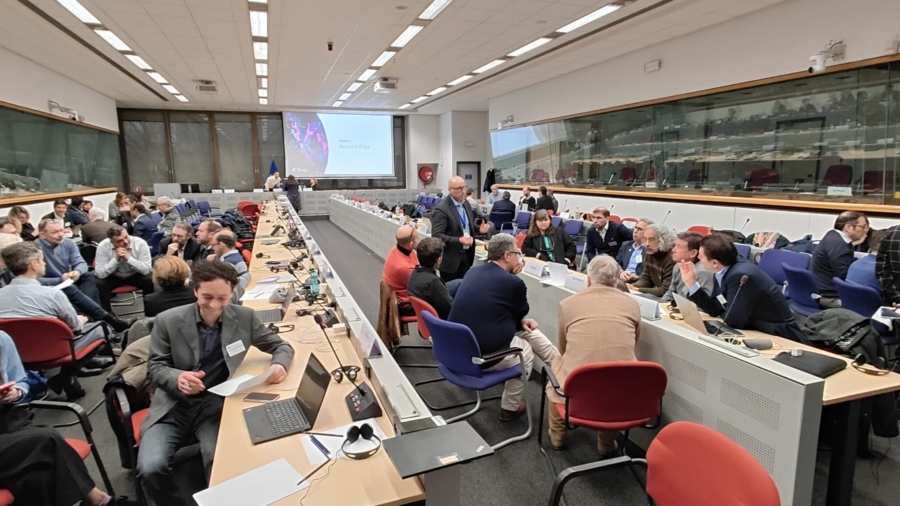
“The Virtual Worlds and Web 4.0 initiative, related research and innovation topics and future priorities” brought together key players in the field to discuss the future of this exciting domain on the 11th February, 2025.
The event saw active participation from a diverse range of projects, all part of a cluster of XR–related projects financed under H2020 and Horizon Europe.
A day of restricted, but also public sessions in the realm of XR
Firstly, the morning session focused on internal discussions among project representatives, providing a platform to delve into the core aspects of the Virtual Worlds and Web 4.0 initiative. Participants explored related research and innovation topics, such as Research strengths and weaknesses in EU and Research gaps, and collaboratively outlined future priorities for the field.
Then, the afternoon session broadened its scope (welcoming members of the VUAS VRAR Industrial Coalition as observers). Attendees gained valuable insights into the goals and achievements of the various participating projects and clusters through presentations, followed by engaging panel discussions. These panels facilitated a rich exchange of ideas concerning research priorities, potential synergies, and opportunities for collaboration.
The meeting fostered a dynamic environment for knowledge sharing and strategic planning, setting the stage for continued progress in the realm of Virtual Worlds and Web 4.0. It was a productive week for all involved!
The project’s Open Call 2, that ran between , closed with a total of 147 applications from all over Europe. The following deep-dive into of the applicants provides valuable insights into the geographic origins, target markets, and valuation of the SMEs that applied. The target audiences were small consortia of up to three partners consisting of XR-developing industrial partners, training organizations and XR-application user/adopters.
Countries of origin
A large number of countries were covered, thanks to dissemination efforts in getting participants from eligible countries. So, this Open Call received proposals from 14 eligible countries. Greece (20,5%), Italy (14,5%), Germany (9,6%), Spain (8,4%), France (7,2%), Turkey (7,2%), were the 6 most represented countries.
SME’s ages
The objective of the Open Call #2 is to perform test, piloting, evaluate and validate the user acceptance of new or already developed XR-based applications in real life settings. In consequence, SME’s from various ages, with 69,2% of the companies being 10 years or less.
Raising capital
Regarding scaling-up, it turns out that only 16.8% of the SMEs applying to the open call were actively seeking investment at the time of application. This suggests that a significant portion of applicants may be seeking other forms of support, such as access to markets, mentorship, or technology partnerships, to scale their businesses.
Valuation
The valuation of the applicant SMEs revealed a diverse landscape. A significant portion (35.3%) were valued between 1 and 4 million, indicating a focus on early-stage growth. While 17.6% command a valuation between 20 and 25 million, suggesting more mature and potentially higher-growth companies. 11.8% of the applicants were valued at less than a million, highlighting the presence of early-stage ventures seeking initial traction. The remaining valuations were distributed across 5-9 million (11.8%), 10-14 million (11.8%), and 15-19 million (11.8%), showcasing a range of company stages and growth trajectories within the applicant pool.
Markets
We can see a range of target markets for the applicant SMEs. Software emerged as the most prominent one, with 31.6% of applicants targeting this sector. XR technologies followed closely with 16.4%, reflecting the core focus of the XR2Learn project. Education and healthcare count as significant markets, with 13.2% and 11.8% of applicants respectively. Artificial intelligence (AI) and 3D applications were also well-represented. Finally, a smaller part of the application focused on data-related solutions, and on blockchain, indicating the growing importance of data-driven approaches and emerging technologies within the XR2Learn ecosystem.
NB: With respect to the targeted sectors, a minimum of 70% will be dedicated to XR-application relevant to industry 5.0 technologies and relevant skills and a maximum of 30% will be allocated to sub-projects targeting other educational sectors (e.g. healthcare and medical, manufacturing, construction and engineering.
Gender balance
The applicant SMEs revealed a significant gender imbalance across leadership and employee levels, as it tends to be the case overall in the ecosystem. Overall, 80.7% of applicants were male-led, while 19.3% were female-led. This disparity was reflected at the leadership level, with 81.5% of CEO positions held by men. While a slightly higher percentage of women were observed in co-founder roles (20.7%), male co-founders still constituted a majority (79.3%). Finally, the employee level also exhibited a similar gender imbalance, with 81.3% of employees being male.
Learn More: Visit our website for detailed information: XR2Learn Website.
Join the Conversation: Connect with experts and peers on the XR2Learn Forum: Visit Forum.
XR2LEARN Open Call #2 Closes with 147 Applications!
We’re excited to share that the XR2LEARN Open Call #2 has officially closed, and we received an impressive 147 applications! This demonstrates the strong interest in using XR and XR-based applications for education and training.
Objective:
Our goal was to test, pilot, and validate new or existing XR-based applications in real-life settings. We focused on enhancing training in manufacturing and distance learning.
Funding:
With a total funding of €2,100,000, we plan to support 10 selected projects. Each project can receive between €30,000 and €300,000 to help bring their innovative ideas to life.
Collaboration:
We encouraged small consortia of up to three partners, including XR developers, training organizations, and XR application users. This collaborative approach is key to driving innovation and success.
Phases:
Each selected project will go through three pilot phases: SPECIFICATION, EXECUTION, and GROWTH. This structure ensures that the best projects achieve growth and market uptake. The top project will receive an additional €5,000 prize.
We look forward to seeing the innovative projects that come out of this Open Call and will keep you updated on their progress.
Thank you to everyone who participated and supported this initiative. Together, we’re advancing the future of XR in education and training!
Get Involved
Whether you’re an SME, a research institution, or an educational actor, XR2Learn Open Call 2 is your chance to contribute to the future of XR in education.
Learn More: Visit our website for detailed information: XR2Learn Website.
Join the Conversation: Connect with experts and peers on the XR2Learn Forum: Visit Forum.
Shopping Basket
Maastricht University (UM) is the most international university in the Netherlands and, with over 22,000 students and more than 5,000 employees, is still growing. The university distinguishes itself with its innovative education model, international character and multidisciplinary approach to research and education. Today, it is considered one of the best young universities in the world.
Founded in 2007, Synelixis Solutions is a high-tech company that aims at developing effective and high-quality automation and system control solutions. They offer services and products in the areas of precision agriculture, the Internet of Things (IoT), security and energy efficiency of information systems, blockchain technology, cloud computing and more. Synelixis has long experience in a variety of international research programs, leading a significant number of them. Result of this involvement is their constant engagement with cutting-edge technologies and the development of new ones. In this context, Synelixis’ engineers are continuously trained in the use and development of the latest technologies.
The University of Applied Sciences and Arts of Southern Switzerland (SUPSI) is one of the nine professional universities recognised by the Swiss Confederation. Founded under Swiss federal law, SUPSI offers more than 30 Bachelor’s Degree and Master’s Degree courses, characterised by cutting edge education which unites classical theoretical-scientific instruction with a professional orientation. Great care is given to research, carried out in key sectors on competitively acquired projects with large European and national agencies or mandated by organisations and institutions.
Founded in 1905, MAGGIOLI S.p.A is one of the biggest ICT integrators in Italy offering a broad range of specific, highly professional solutions in business areas of Information Technology, Electronic Document Management, Cybersecurity, and Citizen services. MAG operates its own Maggioli Academy, a dedicated space for training and networking complemented by the Maggioli e-learning academy, operating its own LMS. MAG is currently involved in many projects funded by the EC through programs, such as Horizon Europe, in domains of eGovernment, eHealth, Industry4.0, Cybersecurity, 5G, Augmented reality, Environmental protection, and more.
LS GROUP aims at enhancing companies’ products and services while optimizing their industrial processes thanks to their expertise in Virtual Reality (VR) and Augmented Reality (AR). The development of applications facilitating the appropriation and use of 3D Technologies is the specialty of LS Group. Their team apply knowledge, experience and know-how to propose the solution adapted to client’s needs and guarantee the project’s success.
Hellenic Open University (HOU) is a Public University founded by the Greek Government in 1992. Their prime mission is to offer open access to higher level education using solely distance learning methodologies while developing and utilising appropriate learning material and teaching methods. HOU also aims to promote scientific and applied research as well as the development of educational content, technologies, and methodologies in the fields of distance and lifelong learning, open education and Open Educational Resources (OER).
F6S is a leading global founder and startup network that helps public sector entities around the world to promote, communicate and disseminate technical and research projects. F6S stands for F-ounder-S. Our mission is to help founders and startups grow to solve the world’s pressing social, economic, environmental, sustainability and innovation problems. In addition to F6S’ work with governmental entities, we also work with corporates, investors, research institutions, programs, universities and others in the global startup ecosystem. F6S tools deliver company growth through grants, partnerships, funding, investment, pilot contracts, partnerships, jobs & talent recruitment and company services.
EIT Manufacturing is an Innovation Community within the European Institute of Innovation and Technology (EIT) – that connects the leading manufacturing actors in Europe. Powered by a strong interdisciplinary and trusted community, it adds unique value to European products, processes, services – and inspires the creation of globally competitive and sustainable manufacturing.
Founded in 1986, the European Association of Distance Teaching Universities (EADTU) is the association of leading higher educational institutions providing flexible degree and continuing education, delivered through various forms of digital teaching and learning. Their profile is in line with the EU’s digitization, re-skilling, and up-skilling priorities. EADTU is at the heart of the development of the European Education Area, the Digital Education Action Plan, and the Bologna Process, representing over 200 European universities and 3 million students.
CNIT (National, Inter-University Consortium for Telecommunications) is a non-profit consortium established in 1995, bringing together 37 public Italian universities to perform research, innovation and education/training activities in the field of Information and Communication Technology. CNIT operates 45 Research Units and has participated in hundreds of research projects, including EU coordinated projects, ERC grants and Italian nation-wide initiatives. They also have significant experience in the organization of scientific events and conferences. The innovation and technology transfer of research results towards end-users and industry is a primary mission for CNIT. They also promote the collaboration between member universities and other educational institutes as well as technical and scientific collaborations with national and international research institutes and industries.