Growth phase

XR2Learn Open Call #2: Three Projects Advance to the Growth Phase

The XR2Learn Open Call #2 has reached a major milestone, with three projects officially advancing to the final GROWTH phase of the programme: NEONATAL, X-DE-MAN, and Portal-XR.

Following an intensive Pilot EXECUTION phase, the selected teams demonstrated strong technical maturity, validated their XR applications with real end users, and delivered robust business plans outlining clear strategies for sustainability and market uptake. Their performance stood out in terms of innovation, feasibility, impact potential, and readiness for scaling.

The Top 3 Projects

NEONATAL is developing immersive XR-based training solutions to strengthen neonatal resuscitation skills among healthcare professionals. By simulating high-pressure clinical scenarios, the project enhances procedural accuracy, decision-making, and teamwork in life-critical situations.

X-DE-MAN applies XR training to the de-manufacturing sector for consumer electronics. Through immersive learning and real-time operational guidance, it improves operator resilience, safety, and efficiency while supporting circular economy principles and Industry 5.0 objectives.

Portal-XR focuses on transforming port operator training by creating realistic VR environments for high-risk operations such as crane handling, hazardous materials management, and emergency response. The solution reduces operational downtime, enhances safety, and lowers training costs.

What Comes Next

The GROWTH phase is designed to support the most promising projects in scaling their solutions, strengthening their market positioning, and accelerating adoption across relevant industries. During this final stage, the teams will focus on expanding deployment, refining commercialization strategies, and maximizing real-world impact.

XR2Learn’s structured three-phase approach – Specification, Execution, and Growth – ensures that only the most impactful and market-ready XR applications move forward. This process supports innovation while promoting sustainability and long-term value creation.

We congratulate NEONATAL, X-DE-MAN, and Portal-XR on reaching this important milestone. Their work demonstrates how Extended Reality can drive meaningful transformation in healthcare, industrial safety, and professional training.

Stay tuned as we follow their journey toward full-scale growth and market uptake.

 
processed-098933DB-EA25-4A0E-8517-2061465B933F

XR2Learn OC1 winners at MECSPE Bari

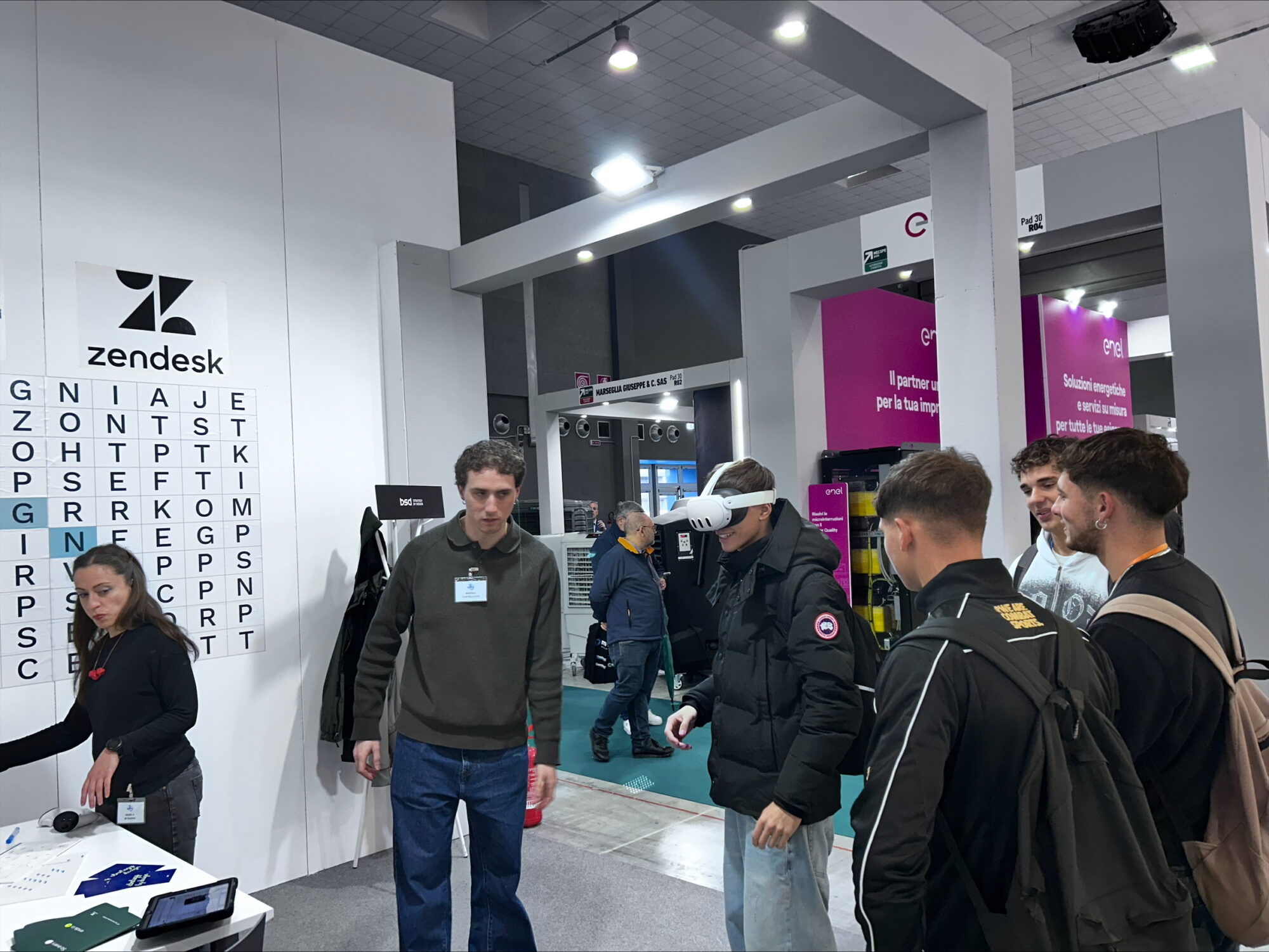
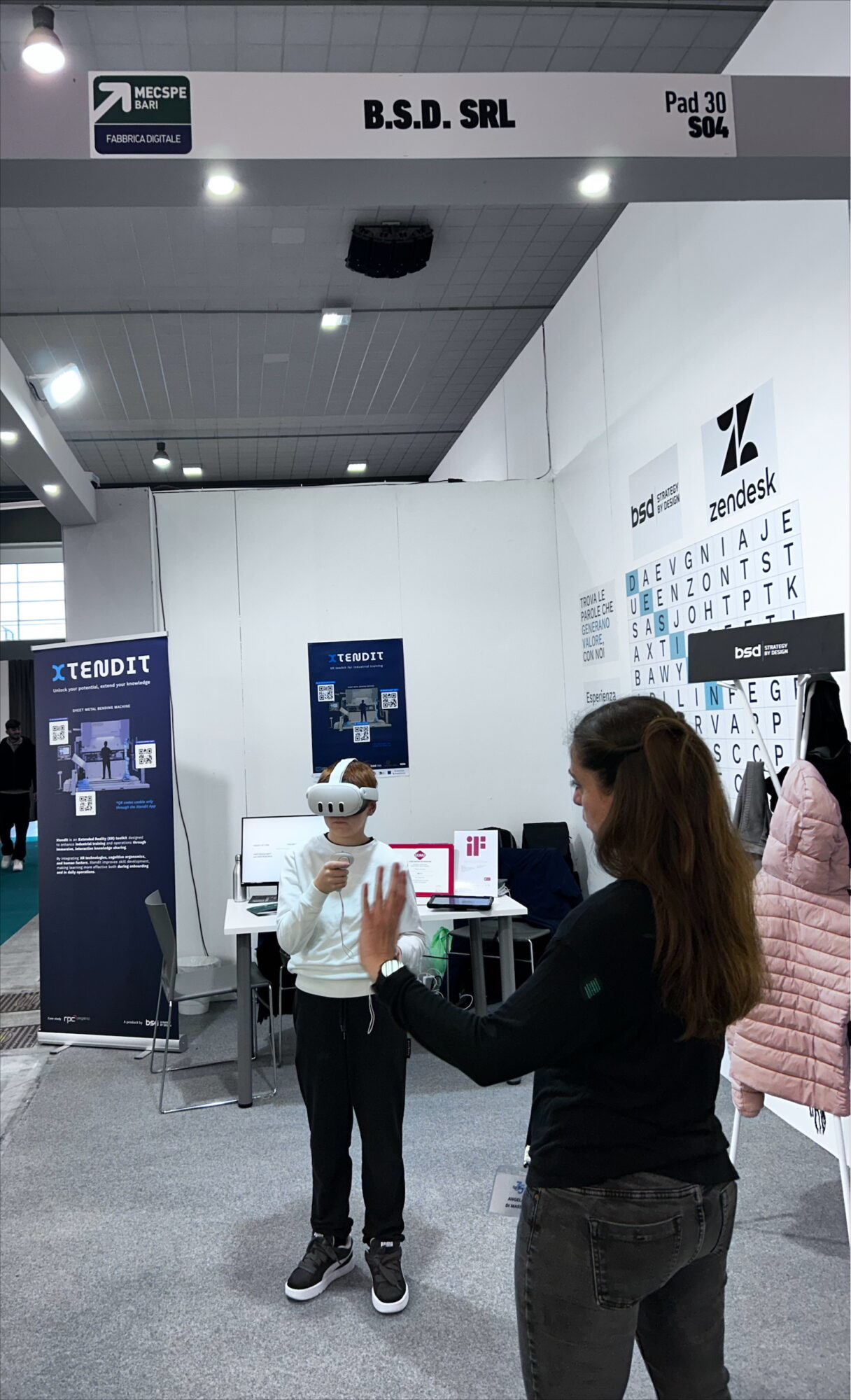
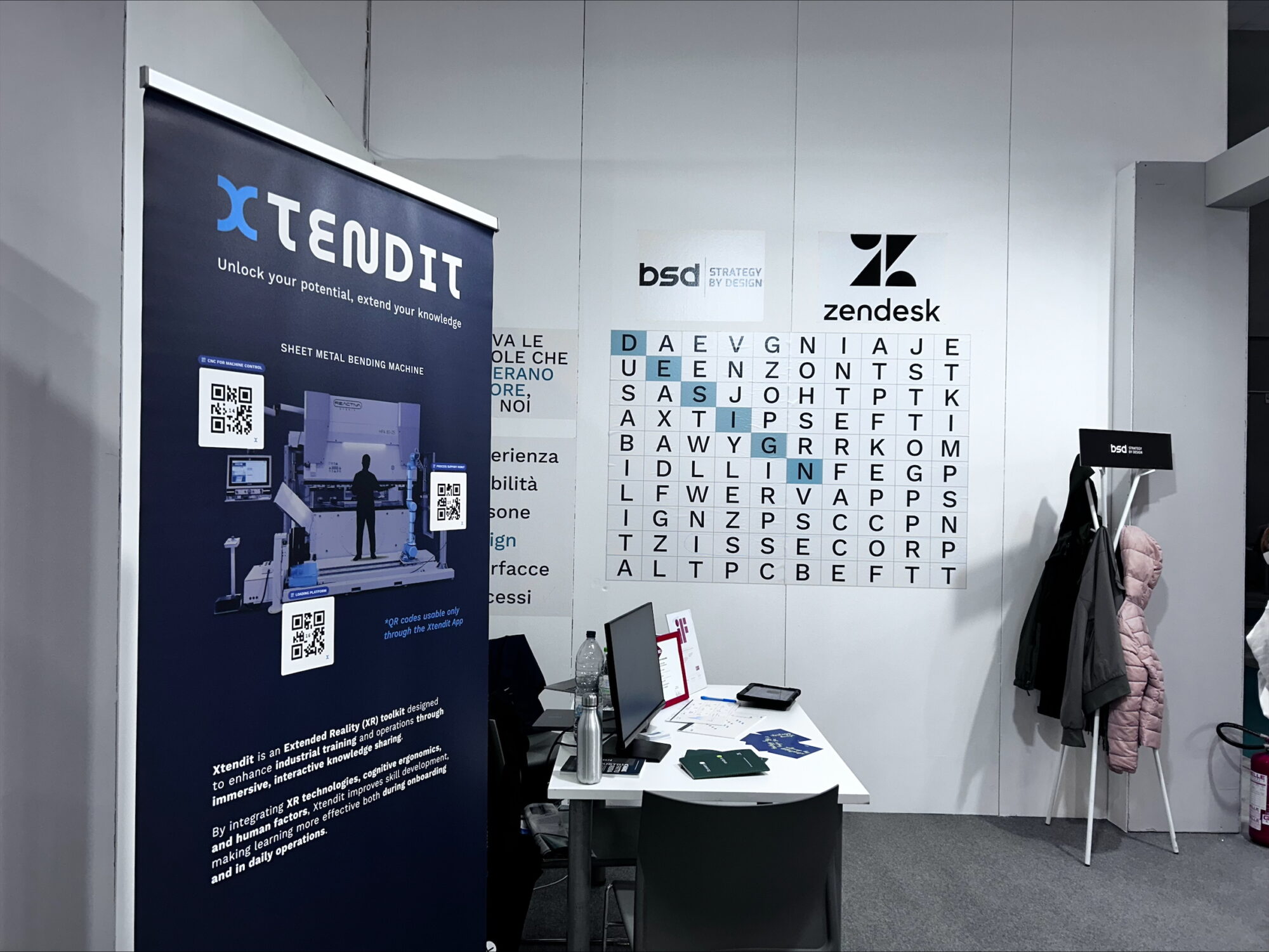
At MECSPE Bari, one of the leading fairs in Southern Italy, it’s clear that the future of learning and innovation is immersive. The young generation of innovators is embracing the potential of Extended Reality (XR) to reshape how we train, learn, and create.

In a world where technology is advancing at an unprecedented rate, it’s more important than ever to highlight the value of immersive training tools. These tools aren’t just a trend—they’re a game changer for industries ranging from manufacturing and engineering to healthcare and education. XR technologies, such as Virtual Reality (VR) and Augmented Reality (AR), offer hands-on, interactive learning experiences that prepare future leaders to tackle real-world challenges with a deeper understanding and confidence.

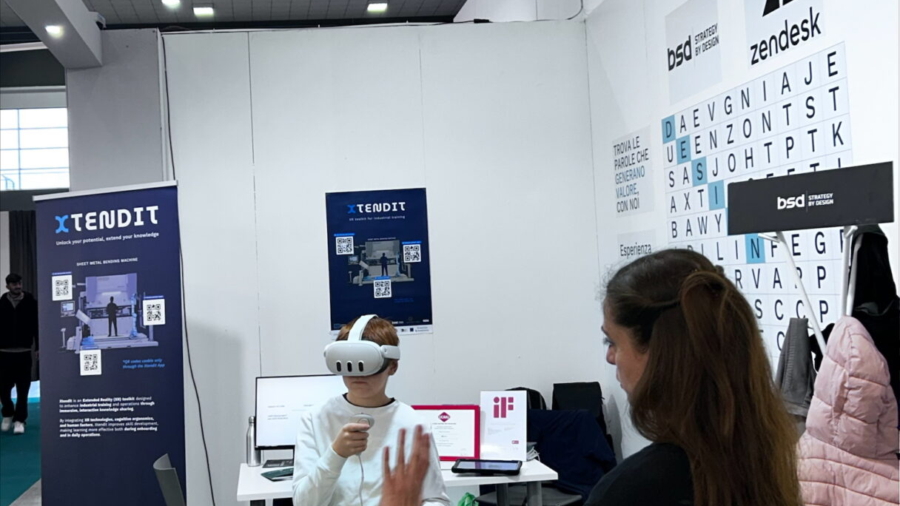
A perfect example of this is Xtendid, the winner of XR2learn OC1 at this year’s MECSPE Bari 2025 is showcasing how XR can revolutionize the training process by providing immersive simulations that not only enhance practical skills but also stimulate creativity and problem-solving in real-time. By combining cutting-edge technology with innovative thinking, Xtendid is paving the way for more effective and engaging learning experiences for the innovators of tomorrow.

As the next generation of engineers, designers, and creators emerges, the demand for more dynamic, hands-on, and flexible learning methods grows. Immersive training tools like those demonstrated by Xtendid help bridge the gap between theoretical knowledge and real-world application. They allow learners to interact with complex systems, troubleshoot problems, and visualize concepts in ways traditional education tools simply cannot.

Whether it’s in a classroom, a factory, or a lab, XR empowers students and professionals alike to experience, experiment, and excel in ways that weren’t possible before. The future of education is immersive, and the time to embrace these tools is now!

oplus_3145728

XR2Learn General Assembly in Maastricht

XR2Learn Consortium Meets in Maastricht to Advance XR-Based Learning and Training

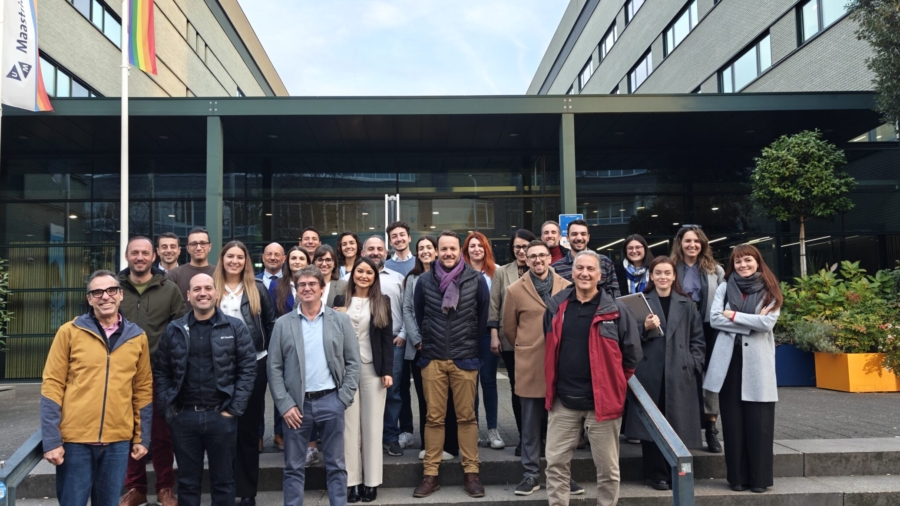
Last week, the XR2Learn consortium gathered in Maastricht, the Netherlands, for a two-day General Assembly hosted by Maastricht University. The meeting brought together all project partners to review progress, align on upcoming milestones, and discuss the next steps toward scaling XR-based learning and training across Europe.

Day 1 Highlights

The first day focused on progress updates and strategic discussions across several key areas:

  • MOOC – Content development and evaluation 

  • Data – Evaluation of enablers and data collection

  • Platform – Strategic impact, sustainability, and value proposition of the XR2Learn Platform

  • WIKI – Content and structure development 

  • Community – Growth, dissemination, and BeyondXR activities 

The afternoon continued with updates from all work packages, including project management, ecosystem building, educational framework, and the progress of Open Call 2 projects. Discussions also focused on dissemination, exploitation, and creating long-term impact beyond the project’s duration.

Day 2 Highlights

The second day was dedicated to Open Call 2 winners, who presented their innovative XR learning solutions:

  • EcoDrive XR, NEONATAL, Portal-XR

  • RTXRoom, X-DE-MAN, XPOTLESS

  • XR2LabTrain, XRTwinScape

In addition to the presentations, the consortium explored NFT-enabled business models, sustainability pathways, and held one-to-one sessions to address data collection and evaluation-related challenges. The event concluded with a session on the next steps for OC2 pilot execution and closing remarks from the coordination team.

The XR2Learn General Assembly was a valuable opportunity for collaboration, knowledge sharing, and planning the next phase of the project as we continue to strengthen the XR learning ecosystem in Europe.

XR2LEARN Women in Tech EU interview

Breaking Barriers in Digital Health: XR2Learn Talks with Women TechEU Winner Katarzyna Koba

XR2LEARN Women in Tech EU interview

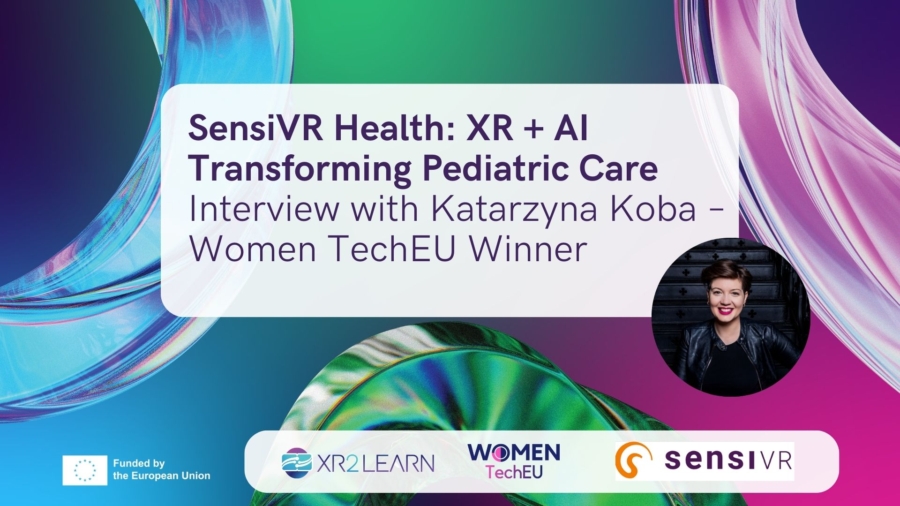
The XR2Learn project had the pleasure of interviewing Katarzyna Koba, one of the visionary leaders awarded under the Women TechEU programme, who is driving innovation at the intersection of extended reality (XR), artificial intelligence (AI), and healthcare.

Katarzyna is the founder of RoboKoba / SensiVR Health, a pioneering digital health solution designed to transform treatment for children with motor disorders such as Developmental Coordination Disorder (DCD), also known as dyspraxia.

At the heart of SensiVR Health lies a sensory virtual room, where biofeedback and XR technologies enable therapists to remotely monitor progress, tailor exercises, and personalize treatment plans. This innovation is particularly impactful for:

  • Children in rural areas, where access to specialized care is limited.

  • Healthcare providers, who can reduce costs while expanding reach.

  • Pediatric hospitals, which can transition to hybrid reimbursement models, improving affordability and accessibility of care.

As part of Women TechEU, Katarzyna and her team benefit from a €75,000 non-dilutive grant, alongside mentoring, coaching, and tailored business development support. This EU initiative aims to create a more gender-balanced deep tech ecosystem by empowering women-led startups to scale their innovations.

In our exclusive XR2Learn interview, Katarzyna shares her journey, the lessons learned in building SensiVR Health, and her vision for the future of digital health powered by XR and AI.

Watch the interview and be inspired by how women-led innovation is reshaping healthcare.

Top 8 - Pilot Execution Phase

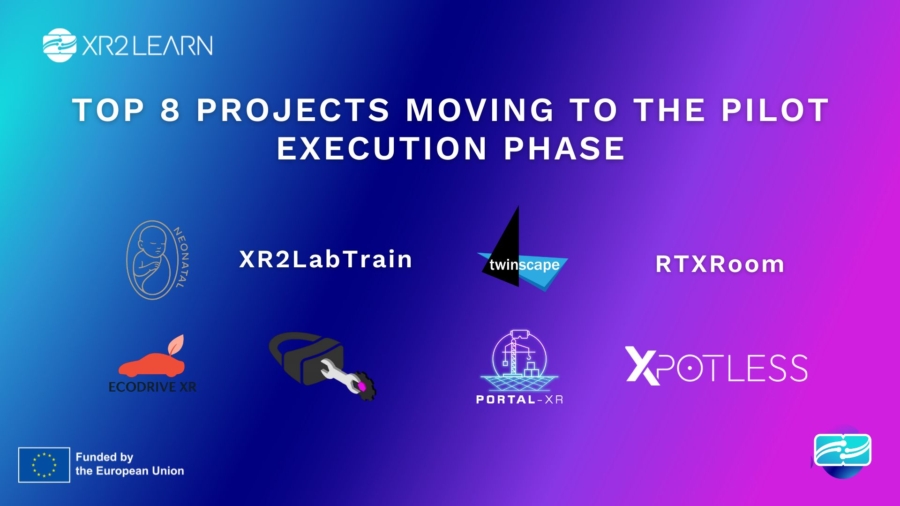
XR2Learn Open Call #2 – Announcing the Top 8 Projects Moving to Pilot Execution

Top 8 - Pilot Execution Phase

The journey of XR2Learn’s Open Call #2 has reached an exciting milestone!

From the initial 10 selected SMEs, each team worked intensively during the Pilot Specification phase, focusing on application customization/adaptation, pilot planning, and the creation of strong business models. Their proposals were evaluated based on innovation, feasibility, and market potential.

Now, the top eight projects have been selected to advance to the Pilot EXECUTION phase:

  • NEONATAL

  • XR2LabTrain

  • XRTwinScape

  • RTXRoom

  • EcoDriveXR

  • X-DE-MAN

  • Portal-XR

  • XPOTLESS

Over the next stage, these projects will:

  • Test and demonstrate their XR solutions with real end users

  • Validate technical performance and user adoption

  • Refine their business plans to boost sustainability and market impact

Following this phase, only three projects will advance to the final GROWTH phase, with the top-ranked project winning an additional €5,000 prize.

This structured approach ensures that the most impactful, innovative, and market-ready XR applications rise to the top — accelerating adoption in sectors like education, training, industry, and healthcare.

Stay tuned as we follow the journeys of these eight exceptional teams!

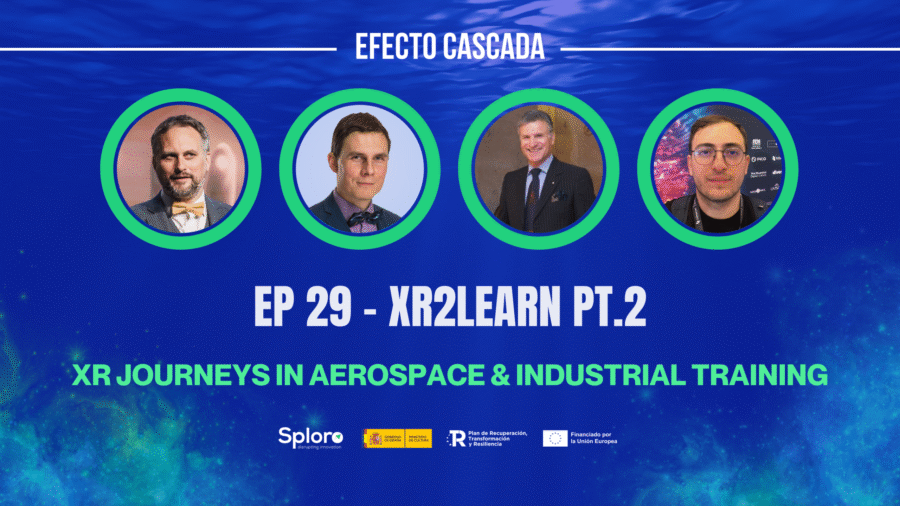
XR Journeys in Aerospace & Industrial Training – XR2Learn Featured on Sploro’s Efecto Cascada Podcast

XR Journeys in Aerospace & Industrial Training – XR2Learn Featured on Sploro’s Efecto Cascada Podcast

XR Journeys in Aerospace & Industrial Training – XR2Learn Featured on Sploro’s Efecto Cascada Podcast

In the latest episode of Sploro’s Efecto Cascada Podcast – Episode 29: “XR2Learn Pt. 2: XR Journeys in Aerospace and Industrial Training”, two outstanding winners from XR2Learn’s Open Call 1 share their groundbreaking work in immersive training technologies.

This special roundtable edition features:

  • CARATE – Represented by Fridolin Wild, Mikhail Fominykh, and Stephan Pascall, the team is pioneering XR tools that take aerospace and astronaut training far beyond traditional classrooms, simulating complex missions and high-pressure scenarios in an immersive, realistic environment. Their work is helping prepare space professionals for the challenges of operating in orbit and beyond.
  • XR4HRC – Led by Berk Kaan, this project is transforming industrial training. By leveraging immersive XR simulations, they enable workers to practice and perfect real-world skills in a safe, controlled environment — boosting efficiency, safety, and confidence before stepping onto the factory floor.

During the discussion, the guests reveal:

  • Their biggest success stories and milestones so far

  • Lessons learned from building and testing XR applications in demanding sectors

  • Surprising insights that emerged along the way

  • What it really takes to get cutting-edge XR innovations from lab to launchpad

This episode offers an inspiring inside look at how XR2Learn-supported projects are making a tangible impact in aerospace and industrial training — and why these technologies could shape the future of education and skills development.

125

Meet Open Call #2 winner XRive!

Meet XRive’s team!

Let’s introduce you to with the brilliant minds behind XRive, out latest Open Call 2 winner of the XR2Learn program. Get familiar with their compelling journey to inclusive mobility! 


1. Can you briefly present us your team? What’s your story and what drives you?

XRive team is comprised of a consortium of partners including Enebula, AviSense.AI technovlastos P.C., and InterMediaKT – Interactive Media Knowledge Transfer.

The XRive team is a multidisciplinary group of experts passionate about shaping the future of safe and inclusive mobility through advanced XR technologies. Our team combines deep expertise in augmented and virtual reality, educational and training content design, human-machine interaction (HMI) interfaces, artificial intelligence, ergonomics, and user-centered tutorials.

Our story began with a shared vision: to bridge the gap between emerging automotive technologies and real-world driver needs. We recognized that while automation and driver-assistance systems (ADAS) have advanced rapidly, their acceptance and effectiveness often lag due to limited driver trust, inadequate training, and insufficient integration of human factors into design. This inspired us to launch XRive, aiming to place drivers and end-users at the center of innovation through a truly human-in-the-loop approach.


2. In simple words, what is your project about and how is it linked with XR2Learn?

XRive is a project that utilizes XR technologies to help drivers learn, train, and become confident in using modern car systems, including driver-assistance features and automated driving tools. The goal is to make driving safer, easier, and more comfortable, especially as cars become smarter and more automated. XRive creates special XR tools that show drivers useful information (for example, warnings about hidden dangers on the road) in a way that is easy to understand and not distracting.

XRive is linked to XR2Learn because it follows the XR2Learn approach on using XR for education and training. XR2Learn provides tools, technology, and guidelines to help projects like XRive design XR-based learning experiences. XRive uses these tools to create training applications for drivers, making sure the technology is easy to use, well-designed, and helps people learn faster and better.


3. How did you come up with this project idea and what benefits will it bring to the end users?

The idea for XRive came from observing the growing complexity of modern vehicles — with ADAS, automated features, and new HMIs — and realizing that many drivers feel overwhelmed, unprepared, or hesitant to trust and use these technologies. Our team saw that while these systems are designed to improve safety, they often fail to gain full user acceptance because drivers don’t always understand how to interact with them effectively. We wanted to bridge this gap by creating an immersive and intuitive training solution that helps drivers build confidence, trust, and skills when using these new technologies.

XRive leverages XR to create a safe and engaging way for drivers to practice, learn, and receive feedback — all before getting on the road. The benefits for end users include:

– Better situational awareness through XR that highlights hidden hazards, such as potholes or occluded vehicles.
– Faster and safer decision-making in critical driving scenarios thanks to early visual warnings.
– Reduced stress and nervousness when using semi-autonomous or fully automated features.
– Personalized training that adapts to each driver’s needs, including those with less experience or specific challenges.
– A sense of trust and comfort in using new automotive technologies, helping drivers feel in control while benefiting from automation.

In addition, the training system is designed to collect valuable feedback from end users and trainees. This feedback is shared with the automotive industry, enabling the automaker industry and technology developers to design more impactful, user-centered ADAS solutions that truly meet the real needs and expectations of drivers. XRive not only improves driver readiness but also helps shape the future of safer, smarter, and more inclusive mobility. 


4. What type of synergies do you want to explore/are already exploring with other XR2Learn teams? 

With XRive, we are very interested in exploring synergies with other XR2Learn teams that can help us enhance both the technical and educational aspects of our solution. Our goal is to build on shared knowledge, tools, and methods to create a stronger, more impactful training system for drivers. We are particularly looking to collaborate with teams that:

Work on XR enablers for analytics, personalization, and real-time adaptation, as these can complement our work in adjusting AR content based on driver state (e.g., fatigue or attention level).

Create evaluation frameworks and success metrics for XR training, so we can jointly validate the benefits of XR for education, measure performance, and improve continuously.

Additionally, we are open to sharing our findings about driver feedback loops and human-in-the-loop design so that other teams can benefit from our approach to user-centered automotive training. By working together, we hope to contribute to a larger ecosystem where XR solutions for learning are scalable, inclusive, and trusted.

5. What are your plans for the future when it comes to the development of your ideas & projects?

Our plans for the future focus on evolving XRive into a comprehensive, scalable solution that can make a real impact on both drivers and the automotive industry. We aim to continue developing our XR-based training platform so that it becomes more adaptive, intelligent, and aligned with real-world needs.

On the technical side, we plan to i) enhance the personalization of AR interfaces by integrating advanced real-time analytics (e.g., monitoring driver attention, fatigue, and cognitive load) to dynamically adapt content; ii) Provide XAI-based (Explainable AI) content that will allow drivers to better understand the reasoning behind smart vehicle decisions and actions, improving trust and transparency in automated
systems; iii) Develop multimodal content, including haptic feedback and natural language processing (NLP)-based interactions, so that end users can receive and process information through multiple sensory channels;This will help make guidance more intuitive and accessible, especially in complex or critical scenarios; iv) Extend compatibility with different types of vehicles and devices, including integration with various head-up displays (HUDs), mobile XR devices, and in-car HMIs; v) Incorporate new data sources (e.g., cooperative V2X communication, smart infrastructure data) to further improve driver situational awareness and safety.

On the educational side, we will: i) develop richer training scenarios covering more complex and critical situations to help drivers safely handle both routine and emergency events; ii) Create structured training programs tailored to different driver profiles (new drivers, professional drivers, drivers with special needs) in collaboration with educational institutions, road safety authorities, and insurers.

Our vision is to position XRive as a key enabler for safer, smarter, and more inclusive mobility, fully aligned with the principles of Industry 5.0. Finally, we are committed to contributing to the automotive and XR ecosystems by: i) sharing part of our tools and findings as open-source components, supporting other innovators; ii) providing actionable feedback to automakers and ADAS developers to help them design more impactful, human-centered systems; iii) exploring commercial pathways, including partnerships with OEMs, insurance companies, and training organizations, to ensure the long-term sustainability and wide adoption of XRive.

122

Meet Open Call #2 winner XCC!

Meet XCC’s team!

We’re delighted to present an exclusive interview with the brilliant minds behind XR CROWD CTRL, a pioneering Open Call 2 winner of the XR2Learn program. In this conversation, the team shares their compelling journey to revolutionize vocational training through immersive XR solutions.

Discover how they are leveraging AI-powered dashboards to enhance collaborative learning in real-time, empowering trainers and shaping the future of skills acquisition in critical industries.

1. Can you briefly present us your team? What’s your story and what drives you?

Since 2011, the MIMBUS team has been working to revolutionize vocational training by providing instructors with immersive learning solutions. We recognize that blue-collar jobs are often underestimated. Young people are increasingly reluctant to pursue careers in this field, and companies struggle to hire a skilled workforce. This talent shortage impacts the economy, despite these jobs requiring a high level of skill and often offering competitive salaries.

By deploying XR learning solutions in TVET centers, we can attract new talent. Learners become more engaged in their training and can benefit from enhanced learning experiences.

Today, we are collaborating with developing countries to provide their TVET centers with these tools, enabling them to leverage this effective training solution, and accelerate the skills acquisition of their population.

2. In simple words, what is your project about and how is it linked with XR2Learn?

Our mission is to support instructors in digitizing their training to become even more effective. To achieve this, we provide them with virtual reality tools that increase learner engagement and help them develop the skills related to their job.

These tools are connected to a platform that analyzes the performance of learners who complete immersive exercises. This platform offers instructors a lot of information on the skill acquisition of their learners.

With XR2Learn, we decided to focus on our immersive learning solutions dedicated to the training of logistics agents. This tool offers a realistic warehouse environment where trainees can practice and improve their skills safely, and collaborate with fellow learners.

Our objective is to take technology even further by developing an AI-based tool that allows instructors to monitor their learners in real-time as they collaborate in virtual reality. This enables instructors to be more responsive and better guide their learners in their training.


3. How did you come up with this project idea and what benefits will it bring to the end users?

The project idea for MIMBUS LOGISTICS was conceived to address the growing need for effective and versatile training tools in the logistics sector. The aim was to create a virtual teaching tool that could provide comprehensive training for logistics agents, from beginner to expert levels. The idea was to leverage virtual reality to create a safe and interactive learning environment where trainees could practice and hone their skills without the risks associated with real-world training.

By integrating the capabilities of XR2Learn, the MIMBUS LOGISTICS project can further benefit from the collaborative and innovative environment provided by the platform. This can lead to the development of more advanced and effective training tools, ultimately benefiting end users by providing them with cutting-edge educational resources.


4. What type of synergies do you want to explore/are already exploring with other XR2Learn teams? 

At MIMBUS, we are keen to explore synergies with other XR2Learn teams, particularly in addressing common challenges related to skill quantification and the integration of “useful” AI. We are very interested in discussing these issues with our colleagues. We look forward to the meet-up in Lugano to delve into these topics with them. Collaborating on these fronts will help us enhance our immersive learning solutions and ensure that our AI tools are both effective and practical for real-time monitoring and guidance in virtual reality training environments.


5. What are your plans for the future when it comes to the development of your ideas & projects?

Once the XCC project is completed, our future plans include generalizing the dashboard and creating an SDK to ensure it can be integrated into any Unity project. This will allow us to provide a versatile and adaptable tool that can be utilized across various applications, enhancing the flexibility and usability of our solutions. By doing so, we aim to support a broader range of projects and foster innovation in immersive learning and training environments.

118

Meet Open Call #2 winner ECODRIVE XR!

Meet ECODRIVE XR’s team!

EcoDrive XR represents a strategic partnership between deep technology firm MATSUKO and the Secondary Vocational School of Industrial Technologies in Košice-Šaca.

This collaboration is dedicated to providing human-centered, sustainable holographic training. The initiative aims to cultivate the next generation of green industry professionals within the automotive and electric vehicle manufacturing sectors. Get to know them now!

1. Can you briefly present us your team? What’s your story and what drives you?

MATSUKO is a deep tech company pioneering real-time holographic communication using AI and a single-camera 3D reconstruction technology. Our solution brings people to life as lifelike holograms in extended reality (XR), making remote presence feel natural, human, and emotionally rich. We combine patented technology with a strong vision: to revolutionize how we connect, learn, and work — whether it’s in education, industry, or creative collaboration. From holographic teachers to virtual meetings, MATSUKO enables interactions that feel like you’re truly there.

Our founders are engineers combining 3D and AI expertise — one was the lead programmer of the globally awarded 3D computer games such as the Assassin’s Creed, another trained robots to understand emotion using AI. What unites us and drives us is the belief that technology should feel human and that we are changing how people collaborate using cutting edge XR and AI technology. That’s why, in EcoDrive XR, we’re building holograms that make education personal, emotional, and unforgettable. 

We are happy that our partner is the Košice-Šaca Vocational School of Industrial Technologies, a leading Slovak secondary school focused on practical education in engineering, mechatronics, and electrical technologies. 


2. In simple words, what is your project about and how is it linked with XR2Learn?

EcoDrive XR is like teleporting the best teacher into the classroom — as a hologram. Students learn how electric vehicles are made, from battery chemistry to car assembly, all inside an immersive, interactive world. Thanks to XR2Learn, we add emotion-aware learning and personalization, making sure every student — especially girls — feels seen, supported, and inspired.


3. How did you come up with this project idea and what benefits will it bring to the end users?

Just a few weeks before the XR2Learn Open Call was announced, we had already started collaborating with the Vocational School of Industrial Technologies in Košice-Šaca. When we saw the call, we instantly knew — this is for us.

Slovakia is the world leader in car production per capita, and our region is transforming fast, with Volvo building a new factory right here in Košice. 

We saw a unique opportunity to prepare students for this green shift by bringing XR into education – locally and globally. 

With EcoDrive XR, students don’t just learn — they experience the process of building electric cars, guided by holographic teachers and interactive 3D models.

At MATSUKO, we’ve been working on a dream — bringing Star Wars-style holograms to life. We’ve patented a unique way to turn people into real-time, 3D holograms using just a single camera. 

Education is one of the most meaningful use cases for us because we believe deeply in the power of human presence — especially that of teachers. With EcoDrive XR, we combine our holographic communication with immersive XR simulations, turning passive lessons into engaging experiences. Students are no longer just listeners; they’re active participants — assembling vehicles, exploring battery design, and interacting with their teacher as a lifelike hologram. It’s a leap forward from traditional education to something truly personal and transformational.

We’re turning textbooks into experiences. Instead of reading about EV production, students build batteries, assemble vehicles, and interact with holographic teachers in virtual environments. Our modules speed up training and boost retention. Plus, by making tech feel intuitive and inclusive, we’re opening doors for more girls to enter STEM.


4. What type of synergies do you want to explore/are already exploring with other XR2Learn teams? 

We’re excited to collaborate on enablers that make XR education smarter and more human — like emotion tracking, adaptive feedback, or new ways to blend physical and virtual learning. 

Together with other XR2Learn teams, we hope to build a future where XR tools are not only technically brilliant but also deeply meaningful in the lives of learners.


5. What are your plans for the future when it comes to the development of your ideas & projects?

We believe the future of communication lies in presence — and our goal is to replace flat video calls with true 3D holographic presence that captures the richness of nonverbal expression, making virtual collaboration more natural, personal, and impactful across education, industry, and everyday life.

We’re building a scalable platform for holographic communication — making lifelike, real-time presence accessible anytime, anywhere.

XR2Learn OC2 NEONATAL

Meet Open Call #2 winner NEONATAL!

Meet NEONATAL’s team!

We are introducing you to a groundbreaking solution in healthcare: the use of simulated VR training to equip healthcare workers with life-saving neonatal resuscitation skills, helping them to deliver better care for newborns at the most critical moment. 

1. Can you briefly present us your team? What’s your story and what drives you?

The Neonatal team is composed of experts from both healthcare and XR design. At the core of the project are Stine Lund, Anja Poulsen, and Hanna Rahimi from Rigshospitalet, bringing extensive experience in global health, pediatrics, and neonatal care. They are supported by Johannes Sivesgaard and Yiannis Kalaitzoglou from Khora, a leading XR production studio specializing in immersive experiences. The team is driven by a shared passion to improve neonatal healthcare and training for healthcare workers, and innovating on how training in XR technologies can overcome the challenges of traditional training methods.


2. In simple words, what is your project about and how is it linked with XR2Learn?

The project, NEONATAL, uses Virtual Reality (VR) to train healthcare workers in neonatal resuscitation, aiming to enhance the quality of care provided to newborns in emergency situations. The project is linked to XR2Learn through its use of XR (Extended Reality) technologies for immersive learning and training. We want to learn how to optimize our training modules to improve neonatal emergency care through scalable and adaptable VR-based training.


3. How did you come up with this project idea and what benefits will it bring to the end users?

The idea for NEONATAL originated from the need to reduce neonatal deaths, which still account for a significant percentage of under-five mortality. The project was conceived to address the challenges of current neonatal training methods. It provides benefits by offering a scalable, cost-effective training solution that can be updated regularly, allowing healthcare workers to practice and refine their neonatal resuscitation skills at their own pace. The project benefits healthcare workers by providing realistic, repeatable training scenarios that build their confidence and decision-making skills, ultimately improving the quality of neonatal care and saving lives.


4. What type of synergies do you want to explore/are already exploring with other XR2Learn teams? 

The NEONATAL project seeks to collaborate with other XR2Learn teams that focus on their expertise and experience with training, VR development, and innovative educational methodologies. We have not yet explored them, but we hope that the synergies will include sharing insights on how to enhance XR applications in medical education, ensuring that the training modules are scalable and adaptable to different healthcare environments, and contributing to a broader European effort to improve medical training through XR.


5. What are your plans for the future when it comes to the development of your ideas & projects?

Moving forward, NEONATAL plans to continue testing and refining the VR training modules, with the aim of implementing the project across Europe. The goal is to create an adaptable VR training application that can be integrated into healthcare systems, with the potential for further expansion into other areas of healthcare training. The project will contribute to the development of standardized, human-centric XR training solutions that can be implemented globally to improve healthcare outcomes.