Inspiring the Next Generation: A Women in XR Webinar
The XR field might be booming, but it’s no secret that women are still underrepresented in this otherwise innovative space. To address this gap and celebrate the amazing contributions of women in XR, we’re thrilled to announce an upcoming webinar: Women in XR: Sharing Experiences, Inspiring Futures.
What to Expect:
This webinar will bring together a panel of 6 inspiring women working in EU-funded XR projects, including XR2Learn, SERMAS, CORTEX2… Through a dynamic panel discussion and open Q&A, we’ll delve into their journeys, explore the challenges and opportunities for women in XR, and discuss how we can collectively foster a more inclusive and diverse field.
Panel Discussion
Each panelist will share their journey in XR and discuss specific topics, guided by the moderator
Audience Q&A
Open the floor for live questions from attendees or collect questions in advance
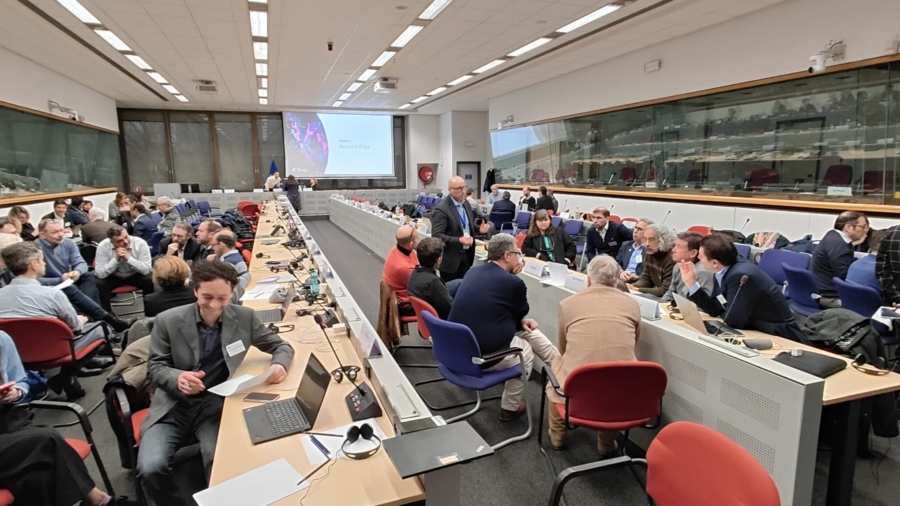
“The Virtual Worlds and Web 4.0 initiative, related research and innovation topics and future priorities” brought together key players in the field to discuss the future of this exciting domain on the 11th February, 2025.
The event saw active participation from a diverse range of projects, all part of a cluster of XR–related projects financed under H2020 and Horizon Europe.
A day of restricted, but also public sessions in the realm of XR
Firstly, the morning session focused on internal discussions among project representatives, providing a platform to delve into the core aspects of the Virtual Worlds and Web 4.0 initiative. Participants explored related research and innovation topics, such as Research strengths and weaknesses in EU and Research gaps, and collaboratively outlined future priorities for the field.
Then, the afternoon session broadened its scope (welcoming members of the VUAS VRAR Industrial Coalition as observers). Attendees gained valuable insights into the goals and achievements of the various participating projects and clusters through presentations, followed by engaging panel discussions. These panels facilitated a rich exchange of ideas concerning research priorities, potential synergies, and opportunities for collaboration.
The meeting fostered a dynamic environment for knowledge sharing and strategic planning, setting the stage for continued progress in the realm of Virtual Worlds and Web 4.0. It was a productive week for all involved!
The project’s Open Call 2, that ran between , closed with a total of 147 applications from all over Europe. The following deep-dive into of the applicants provides valuable insights into the geographic origins, target markets, and valuation of the SMEs that applied. The target audiences were small consortia of up to three partners consisting of XR-developing industrial partners, training organizations and XR-application user/adopters.
Countries of origin
A large number of countries were covered, thanks to dissemination efforts in getting participants from eligible countries. So, this Open Call received proposals from 14 eligible countries. Greece (20,5%), Italy (14,5%), Germany (9,6%), Spain (8,4%), France (7,2%), Turkey (7,2%), were the 6 most represented countries.
SME’s ages
The objective of the Open Call #2 is to perform test, piloting, evaluate and validate the user acceptance of new or already developed XR-based applications in real life settings. In consequence, SME’s from various ages, with 69,2% of the companies being 10 years or less.
Raising capital
Regarding scaling-up, it turns out that only 16.8% of the SMEs applying to the open call were actively seeking investment at the time of application. This suggests that a significant portion of applicants may be seeking other forms of support, such as access to markets, mentorship, or technology partnerships, to scale their businesses.
Valuation
The valuation of the applicant SMEs revealed a diverse landscape. A significant portion (35.3%) were valued between 1 and 4 million, indicating a focus on early-stage growth. While 17.6% command a valuation between 20 and 25 million, suggesting more mature and potentially higher-growth companies. 11.8% of the applicants were valued at less than a million, highlighting the presence of early-stage ventures seeking initial traction. The remaining valuations were distributed across 5-9 million (11.8%), 10-14 million (11.8%), and 15-19 million (11.8%), showcasing a range of company stages and growth trajectories within the applicant pool.
Markets
We can see a range of target markets for the applicant SMEs. Software emerged as the most prominent one, with 31.6% of applicants targeting this sector. XR technologies followed closely with 16.4%, reflecting the core focus of the XR2Learn project. Education and healthcare count as significant markets, with 13.2% and 11.8% of applicants respectively. Artificial intelligence (AI) and 3D applications were also well-represented. Finally, a smaller part of the application focused on data-related solutions, and on blockchain, indicating the growing importance of data-driven approaches and emerging technologies within the XR2Learn ecosystem.
NB: With respect to the targeted sectors, a minimum of 70% will be dedicated to XR-application relevant to industry 5.0 technologies and relevant skills and a maximum of 30% will be allocated to sub-projects targeting other educational sectors (e.g. healthcare and medical, manufacturing, construction and engineering.
Gender balance
The applicant SMEs revealed a significant gender imbalance across leadership and employee levels, as it tends to be the case overall in the ecosystem. Overall, 80.7% of applicants were male-led, while 19.3% were female-led. This disparity was reflected at the leadership level, with 81.5% of CEO positions held by men. While a slightly higher percentage of women were observed in co-founder roles (20.7%), male co-founders still constituted a majority (79.3%). Finally, the employee level also exhibited a similar gender imbalance, with 81.3% of employees being male.
Learn More: Visit our website for detailed information: XR2Learn Website.
Join the Conversation: Connect with experts and peers on the XR2Learn Forum: Visit Forum.
On November 28th, XR2Learn hosted an engaging Exploitation Workshop for the winners of its Open Call 1. The event brought together seven outstanding projects—CARATE, EVR-OSH-5, PAPERXR, PROXIMA, X-ALFY, XR2IND, and XR4HRC—each pushing the boundaries of XR-based solutions in education and training.
The workshop, conducted virtually, focused on helping participants refine their project vision by identifying their target customers, understanding customer pain points, defining the unique value of their solutions, and positioning themselves in the competitive landscape. To foster collaboration and creativity, the session utilized an interactive Miro Board, with breakout rooms, ensuring personalized guidance for each team.
Diving into the Essentials of Exploitation
The core of the workshop revolved around several critical elements that contribute to the success of any innovation:
Target Customers: Teams were guided to identify their key customers—the individuals or organisations experiencing the problem their solution aims to address. Participants brainstormed their target audiences and narrowed them to the most crucial segment.
Customer Problems: Once customers were identified, teams stepped into their shoes to explore challenges from the customer’s perspective. This exercise emphasised understanding real-world needs and building solutions that resonate.
Customer Values: The discussion then shifted to what matters most to the customer. Teams reflected on the unique benefits their projects could bring and how their solutions could alleviate pain points or improve efficiency.
Investment Worthiness: Participants were encouraged to think like investors, articulating why their projects are worth backing and how they align with business goals and KPIs.
Competitive Landscape: Teams analysed their competitors and considered what sets their solutions apart, helping them better define their unique positioning in the market.
Crafting the Unique Value Proposition
The highlight of the workshop was the creation of a Unique Value Proposition (UVP) statement—a concise and compelling expression of each project’s core value. Using a simple sentence structure, participants distilled their ideas into statements that clearly communicated their offerings and their relevance to their target customers.
For example, one UVP might look like this: “Our [product/service] helps [customer segment] who want to [goal or job to be done] by [addressing a pain point] and [delivering a specific benefit].”
This exercise helped teams articulate not only what they offer but also how their solutions uniquely address their customers’ needs.
Closing the Workshop
To conclude, each team presented their UVP statement to the group, showcasing their progress and insights. This activity highlighted the diversity of ideas and approaches among the projects, while reinforcing the importance of clarity and customer focus.
Looking Ahead
The XR2Learn Exploitation Workshop was a resounding success, equipping participants with tools and strategies to maximize the impact of their XR-based solutions. As the projects evolve, we look forward to seeing how these insights shape their journeys, helping them bring their innovative ideas to life in education and training.
Stay tuned for more updates on the incredible projects coming out of the XR2Learn program!
Book your tickets! Come and meet us at AWE EU 2024 in Vienna! AWE was first launched in 2010 and having gathered over 5,000 companies and 60,000 professionals. It brings together end-users and solution providers, investors and startups, creators, developers and brands, job seekers and recruiters from all over the world. Its mission is to […]
We are proud to share that LS Group, one of the partners in the XR2Learn project, presented our innovative project at VivaTech 2024, held from May 22-25 at Paris Expo Porte de Versailles. VivaTech, Europe’s largest startup and technology event, is a vibrant annual conference dedicated to innovation and startups, bringing together visionaries from around the globe.
We are proud to share that LS Group, one of the partners in the XR2Learn project, presented our innovative project at VivaTech 2024, held from May 22-25 at Paris Expo Porte de Versailles. VivaTech, Europe’s largest startup and technology event, is a vibrant annual conference dedicated to innovation and startups, bringing together visionaries from around the globe.
Meet the dynamic team behind EVR-OSH – Zengo, a burgeoning force in VR and educational content development, and TopSafe, a prominent figure in occupational health and safety. With a combined experience spanning over a decade, these two entities have joined forces to embark on an ambitious journey within the XR2Learn project. Their shared mission? To revolutionise traditional learning paradigms through immersive technologies. Let’s delve into their story, aspirations, and the exciting project they’re bringing to the table.
Meet the visionary team behind X-Alfy: VENAKA TreeLeaf GbR (VTG). In this exclusive interview, VTG shares insights into their groundbreaking project, X-Alfy, which aims to provide advanced XR tools for forestry education and environmental awareness. Discover how X-Alfy evolved from VTG’s passion for addressing climate change challenges and how it’s poised to benefit end-users by enhancing forestry practices and fostering environmental consciousness.
Welcome to an insightful interview featuring the dynamic team behind PROXIMA, a groundbreaking project developed by BSD in collaboration with PROTESA and the University of Bologna (UNIBO). Together, they bring a wealth of expertise in Human Factors, Industrial Design, and Engineering Quality Control to the forefront of industrial training innovation.
Shopping Basket
Maastricht University (UM) is the most international university in the Netherlands and, with over 22,000 students and more than 5,000 employees, is still growing. The university distinguishes itself with its innovative education model, international character and multidisciplinary approach to research and education. Today, it is considered one of the best young universities in the world.
Founded in 2007, Synelixis Solutions is a high-tech company that aims at developing effective and high-quality automation and system control solutions. They offer services and products in the areas of precision agriculture, the Internet of Things (IoT), security and energy efficiency of information systems, blockchain technology, cloud computing and more. Synelixis has long experience in a variety of international research programs, leading a significant number of them. Result of this involvement is their constant engagement with cutting-edge technologies and the development of new ones. In this context, Synelixis’ engineers are continuously trained in the use and development of the latest technologies.
The University of Applied Sciences and Arts of Southern Switzerland (SUPSI) is one of the nine professional universities recognised by the Swiss Confederation. Founded under Swiss federal law, SUPSI offers more than 30 Bachelor’s Degree and Master’s Degree courses, characterised by cutting edge education which unites classical theoretical-scientific instruction with a professional orientation. Great care is given to research, carried out in key sectors on competitively acquired projects with large European and national agencies or mandated by organisations and institutions.
Founded in 1905, MAGGIOLI S.p.A is one of the biggest ICT integrators in Italy offering a broad range of specific, highly professional solutions in business areas of Information Technology, Electronic Document Management, Cybersecurity, and Citizen services. MAG operates its own Maggioli Academy, a dedicated space for training and networking complemented by the Maggioli e-learning academy, operating its own LMS. MAG is currently involved in many projects funded by the EC through programs, such as Horizon Europe, in domains of eGovernment, eHealth, Industry4.0, Cybersecurity, 5G, Augmented reality, Environmental protection, and more.
LS GROUP aims at enhancing companies’ products and services while optimizing their industrial processes thanks to their expertise in Virtual Reality (VR) and Augmented Reality (AR). The development of applications facilitating the appropriation and use of 3D Technologies is the specialty of LS Group. Their team apply knowledge, experience and know-how to propose the solution adapted to client’s needs and guarantee the project’s success.
Hellenic Open University (HOU) is a Public University founded by the Greek Government in 1992. Their prime mission is to offer open access to higher level education using solely distance learning methodologies while developing and utilising appropriate learning material and teaching methods. HOU also aims to promote scientific and applied research as well as the development of educational content, technologies, and methodologies in the fields of distance and lifelong learning, open education and Open Educational Resources (OER).
F6S is a leading global founder and startup network that helps public sector entities around the world to promote, communicate and disseminate technical and research projects. F6S stands for F-ounder-S. Our mission is to help founders and startups grow to solve the world’s pressing social, economic, environmental, sustainability and innovation problems. In addition to F6S’ work with governmental entities, we also work with corporates, investors, research institutions, programs, universities and others in the global startup ecosystem. F6S tools deliver company growth through grants, partnerships, funding, investment, pilot contracts, partnerships, jobs & talent recruitment and company services.
EIT Manufacturing is an Innovation Community within the European Institute of Innovation and Technology (EIT) – that connects the leading manufacturing actors in Europe. Powered by a strong interdisciplinary and trusted community, it adds unique value to European products, processes, services – and inspires the creation of globally competitive and sustainable manufacturing.
Founded in 1986, the European Association of Distance Teaching Universities (EADTU) is the association of leading higher educational institutions providing flexible degree and continuing education, delivered through various forms of digital teaching and learning. Their profile is in line with the EU’s digitization, re-skilling, and up-skilling priorities. EADTU is at the heart of the development of the European Education Area, the Digital Education Action Plan, and the Bologna Process, representing over 200 European universities and 3 million students.
CNIT (National, Inter-University Consortium for Telecommunications) is a non-profit consortium established in 1995, bringing together 37 public Italian universities to perform research, innovation and education/training activities in the field of Information and Communication Technology. CNIT operates 45 Research Units and has participated in hundreds of research projects, including EU coordinated projects, ERC grants and Italian nation-wide initiatives. They also have significant experience in the organization of scientific events and conferences. The innovation and technology transfer of research results towards end-users and industry is a primary mission for CNIT. They also promote the collaboration between member universities and other educational institutes as well as technical and scientific collaborations with national and international research institutes and industries.